Home » GPF/OPF Removal (GPF Off) – Optimize Your Vehicle’s Performance
GPF/OPF Removal (GPF Off) – Optimize Your Vehicle’s Performance
What is a GPF/OPF System?
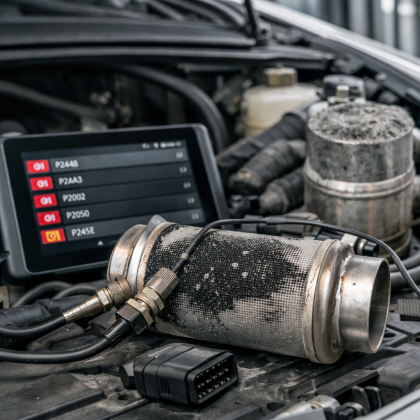
Common Diagnostic Trouble Codes (DTCs) Associated with GPF Issues
- P24A4 - Particulate Filter Restriction – Soot Accumulation
- P24A5 - Particulate Filter Restriction – Ash Accumulation
- P24B0 - Particulate Filter Pressure Sensor A Circuit Range/Performance
- P24B1 - Particulate Filter Pressure Sensor B Circuit Range/Performance
- P24C6 - Particulate Filter Differential Pressure Too Low
- P2459 - Particulate Filter Regeneration Frequency
- P2002 - Diesel Particulate Filter Efficiency Below Threshold (while primarily for diesel systems, some vehicles may still use similar codes for gasoline variants)
- P14A3 - Particulate Filter Temperature Sensor Circuit Intermittent/Erratic
- P14A7 - Particulate Filter Temperature Sensor Circuit High Voltage
- P14A9 - Particulate Filter Temperature Sensor Circuit Low Voltage
These DTCs are triggered when the GPF system encounters issues such as blockages, sensor malfunctions, or failures in the regeneration process. Ignoring these warnings can lead to reduced engine performance, increased fuel consumption, or even engine damage.
How Does the GPF Work?
What is GPF Off (OPF Removal)?
- OPF Off
- GPF Removal
- OPF Removal
- Petrol Soot Filter Removal
- GPF Delete
Why Consider GPF/OPF Removal?
- Performance Boost: By removing the GPF, your engine is no longer restricted by the soot filter, allowing it to run more efficiently. This can lead to noticeable improvements in throttle response, power, and fuel economy.
- Enhanced Exhaust Sound: Many drivers complain that the GPF/OPF system dampens the engine’s sound. With a GPF removal, your vehicle's exhaust sound becomes more aggressive and sporty.
- Avoid Expensive Repairs: When a GPF/OPF fails or becomes blocked, replacement can be extremely costly. GPF Off offers a more affordable alternative, saving you from having to buy a new GPF or invest in expensive repair work.
- Racetrack Use: For motorsports enthusiasts, the GPF can hinder high-performance vehicles on the track. GPF/OPF removal is a common choice for racing applications where maximizing power output is crucial.
- Prevention of Clogs and Regeneration Issues: Vehicles that don’t reach optimal temperatures regularly can struggle with GPF regeneration, leading to blockages. For these vehicles, GPF Off can prevent future clogging issues altogether.
Legal and Regulatory Considerations
- Temporary Solution (Short-Term Use): GPF Off can be used as a temporary solution if you are facing issues with your GPF, such as blockages or sensor malfunctions. However, this should only be a short-term fix while you arrange for proper repairs or replacements. Driving with a disabled GPF on public roads without permanent legal resolution can result in fines or other penalties. Make sure to rectify the situation as soon as possible to avoid long-term legal risks.
- For Track Use Only: GPF removal is ideal for vehicles used exclusively for track and motorsport events. If your car is not intended for public road use, GPF Off can enhance performance, exhaust sound, and throttle response on the track. However, driving on public roads with the GPF disabled is illegal in most regions, and you must adhere to this restriction to avoid legal repercussions.
- Afterwards Recertification by Local Government: If you wish to continue driving your vehicle on public roads after disabling the GPF, you must have the car recertified by the local government. This involves passing emissions tests and obtaining approval from the relevant authorities to ensure your car meets local environmental standards. This option allows you to legally drive your vehicle on public roads after GPF removal, provided the necessary recertification is completed.
When is GPF Off the Only Solution?
There are scenarios where GPF Off is the only practical option:
- Severe Blockages: If your GPF becomes severely clogged and regeneration cycles fail to clear it, removal may be the only way to restore performance.
- Unavailability of Replacement Parts: Older or specialized vehicle models might not have replacement GPF units readily available, making removal the most cost-effective and efficient solution.
- High Mileage Vehicles: Over time, GPFs become less effective, and the cost of replacement on high-mileage cars may not be worth it compared to a simple removal.
We are committed to guiding you through every step of the process, ensuring the successful removal of the Adblue system while addressing any challenges that may arise. While it may take some time and adjustments, our team will work with you to ensure your vehicle is free from Adblue-related issues.
If you’re ready to proceed, upload your file today, and we’ll start working on it right away!